Question
Did Savarkar write mercy petitions?
Yes. While held in the Cellular Jail at Port Blair between 1911 and 1921, Savarkar submitted several petitions to the British Government of India asking for release, including petitions dated 14 November 1913 and 30 March 1920 and others in 1911, 1914 and 1917. He was moved to mainland prisons in 1921 and released on 6 January 1924 on condition that he live in Ratnagiri district and stay out of politics. By his own account he petitioned because a prisoner who could get out and work for the country was bound to try, and he asked for the release of all political prisoners, not only himself.
The record
Savarkar was serving two sentences of transportation for life, passed in Bombay on 24 December 1910 and 30 January 1911. He reached the Cellular Jail in July 1911.
His letter of 6 July 1920 to his brother Narayanrao, the last Andaman letter in the published edition, refers to the petition he had submitted earlier that year and to the release of other political prisoners.
Page images of the petitions of 14 November 1913, 1914 and 30 March 1920 survive in the National Archives of India. In June 1921 the Home Department recorded its decision not to extend the amnesty to the Savarkar brothers; the same file reproduces a petition of 18 April 1921 from Savarkar's wife Yamunabai asking for the release of both.
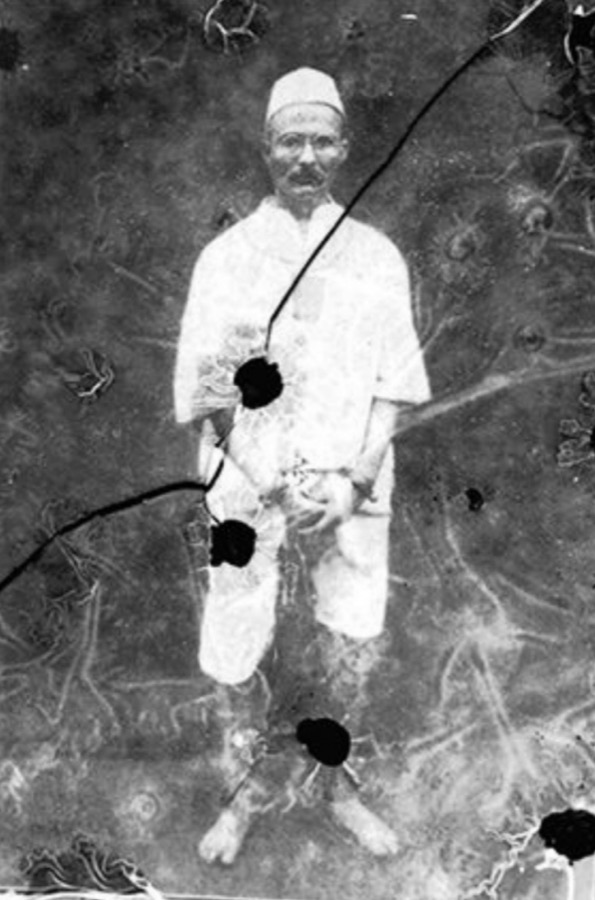

What the Cellular Jail was like
Savarkar was twenty-eight when he arrived in July 1911 with fifty years to serve. He was classed as a dangerous prisoner. In My Transportation for Life he describes the first months in solitary confinement, and the work: political prisoners were yoked to the oil mill and made to turn out a fixed weight of coconut oil each day, or to pound coir, on poor food and under punishments that included standing handcuffs, fetters and flogging.
Letters home were allowed about once a year and were censored. His elder brother Babarao was held in the same jail, and for a long time the two were kept from meeting. In 1912 a fellow political prisoner, Indubhushan Roy, hanged himself in his cell; another lost his reason. The political prisoners went on strike over the conditions more than once.
His letter of 21 September 1919 reports his falling weight and failing health after eight years.
Why he wrote them, in his own words
Petitioning was the lawful route open to every prisoner, and other political prisoners in the Andamans used it too. Savarkar's stated view, set out in his memoir, was that a revolutionary did no good to his country by wasting away in a cell: the duty was to get out by whatever undertaking the government would accept, and then work.
He did not ask only for himself. The petition of 1917 asked for a general amnesty for all political prisoners, and said that if the government doubted his motive it could release the others and keep him. His wife Yamunabai's petition of 18 April 1921 asked for both brothers together.
The government did not take the petitions at face value. It released other prisoners under the amnesty of 1919-1920 and, in June 1921, recorded its decision not to release the Savarkar brothers. He was held for nearly three more years.
What he did once he was out
He was released on 6 January 1924 and confined to Ratnagiri district, barred from politics, until 1937. In those thirteen years he campaigned against untouchability, organised public inter-caste dinners from 1930 and had the Patit Pavan Mandir, a temple open to every Hindu, opened in 1931. He wrote Hindu-Pad-Padashahi, his memoir of the Andamans, plays, poems and essays on caste and science.
When the restrictions ended in 1937 he became president of the Hindu Mahasabha and led it for six years. He presided over the Marathi literary conference in 1938, kept writing into his eighties, and in 1952 dissolved Abhinav Bharat on the ground that its aim, India's freedom, had been achieved.
The charge, and the answer
What critics say. Critics call the petitions an apology and a promise of loyalty to the British, set them against the title “Veer” (brave), and say that after 1924 he took no part in any campaign against British rule.
The petitions were the one lawful way out of a jail built to break men, and every political prisoner had the right to use it. Savarkar used it in the open. He asked for the release of all political prisoners and offered to stay behind if the others were freed.
The government never believed he had changed. It freed others and kept him: three more years in prison, then thirteen confined to a single district. He spent those years breaking caste barriers at Ratnagiri, writing history and poetry, and then leading a national party. He asked to be let out so that he could work, and he worked.
Sources
- Savarkar's petitions of 14 November 1913, 1914 and 30 March 1920: page images · Original source
- Home Department proceedings, June 1921: the amnesty and the Savarkar brothers · Original source
- My Transportation for Life (1927) · Original source
- Letters from Andamans (1912-1920) · Original source
- The Maratha on the death of Indubhushan Roy Chaudhari, 28 July 1912 · Original source
- Autobiography of Barindra Kumar Ghosh · Original source
- Swatantryaveer Vinayak Damodar Savarkar: Lok Sabha Secretariat booklet (2003) · Original source
Cite this page
Savarkar Archive. “Did Savarkar write mercy petitions?.” https://savarkararchive.com/questions/did-savarkar-write-mercy-petitions. Accessed [date].
Permanent address: https://savarkararchive.com/questions/did-savarkar-write-mercy-petitions