Rashtra
A territorial attachment to Bharat, imagined from Sindhu to the seas as motherland and fatherland.
Vinayak Damodar Savarkar, 1883-1966
His writings, world, and contested legacy, read through primary sources and serious scholarship.
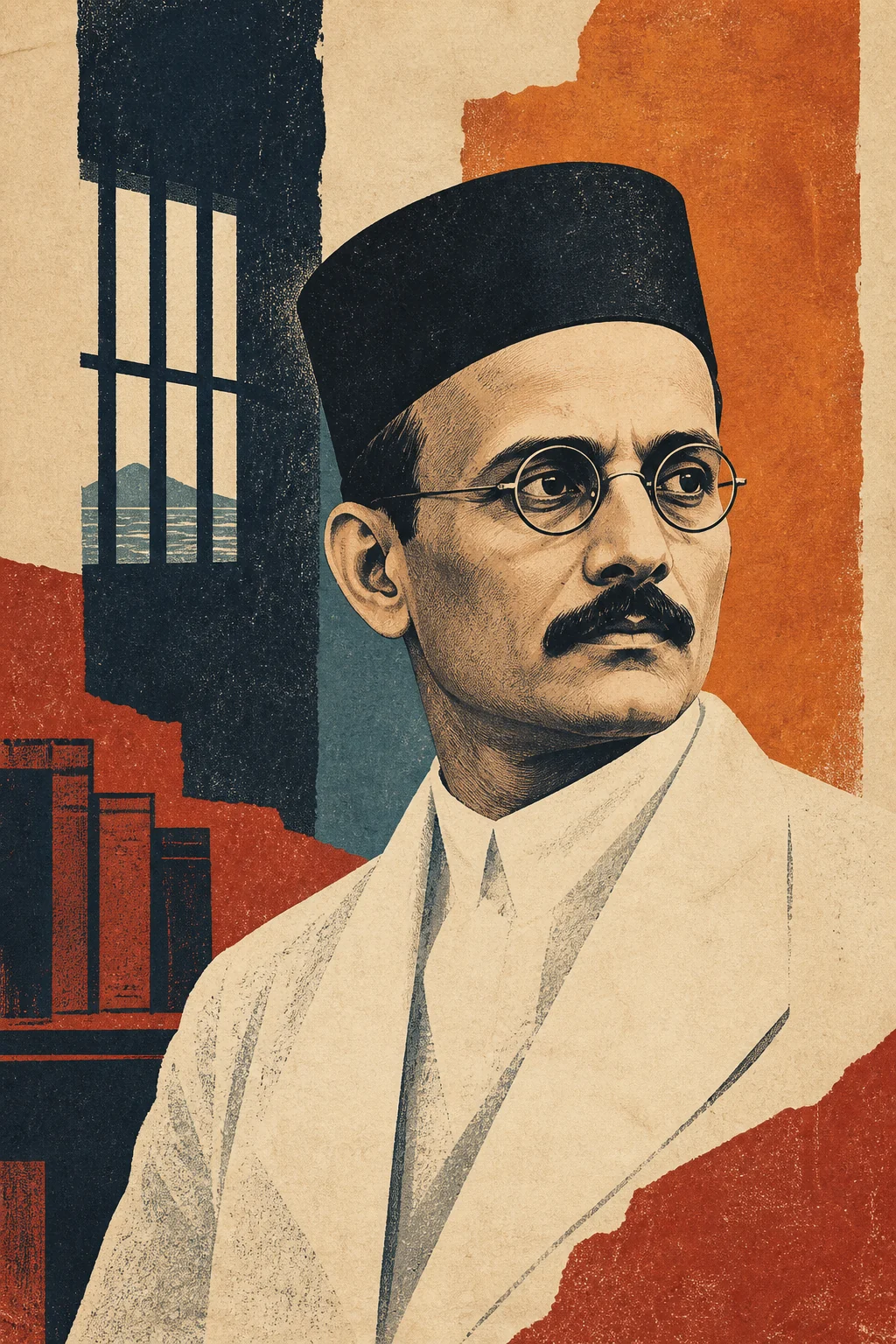
In Hindutva: Who Is a Hindu?, Savarkar constructs Hindutva as a political and civilizational identity rather than a religious doctrine alone.
A territorial attachment to Bharat, imagined from Sindhu to the seas as motherland and fatherland.
A claimed brotherhood formed through descent, mixture, incorporation, and a shared sense of belonging.
A common inheritance of literature, art, languages, institutions, law, ritual, memory, and achievement.
Select a bond to see what the text claims, what evidence it asks us to collect, and where the definition closes.
The argument turns territory into a homeland through rivers, pilgrimage, stories, conflict, monuments, and remembered achievement.
Bharat is presented as more than political territory. Geography acquires emotional and civilizational meaning.
Which letters, journeys, maps, speeches, and place references show how this geography changed across Savarkar's life?
Source status: summary grounded in Essentials of Hindutva, pp. 33-43. Open the primary text
Savarkar describes a people formed through ancestry, mixture, adoption, and incorporation, while still treating descent as a political bond.
Internal differences of caste, region, and sect are placed inside a larger account of collective belonging.
Do private letters and organisational records use this category consistently, or does its meaning change with audience and circumstance?
Source status: editorial summary. Exact page-level annotation is pending source review. Inspect the source scan
Literature, art, languages, law, ritual, institutions, memory, and historical achievement are gathered into a common inheritance.
Shared culture can bind people across religious practice and philosophical belief, including theists and atheists.
Which works and correspondence reveal what Savarkar chose to include as culture, and which traditions were minimized or omitted?
Source status: editorial summary. Exact page-level annotation is pending source review. Inspect the source scan
The holy-land criterion excludes Muslims and Christians from Savarkar's Hindu category, even where ancestry and culture overlap.
India must be both fatherland and holy land. That final condition narrows the unity built by the earlier bonds.
How was this boundary argued, revised, challenged, or applied in letters, speeches, political programmes, and contemporary criticism?
Source status: editorial summary. Exact page-level annotation is pending source review. Inspect the source scan
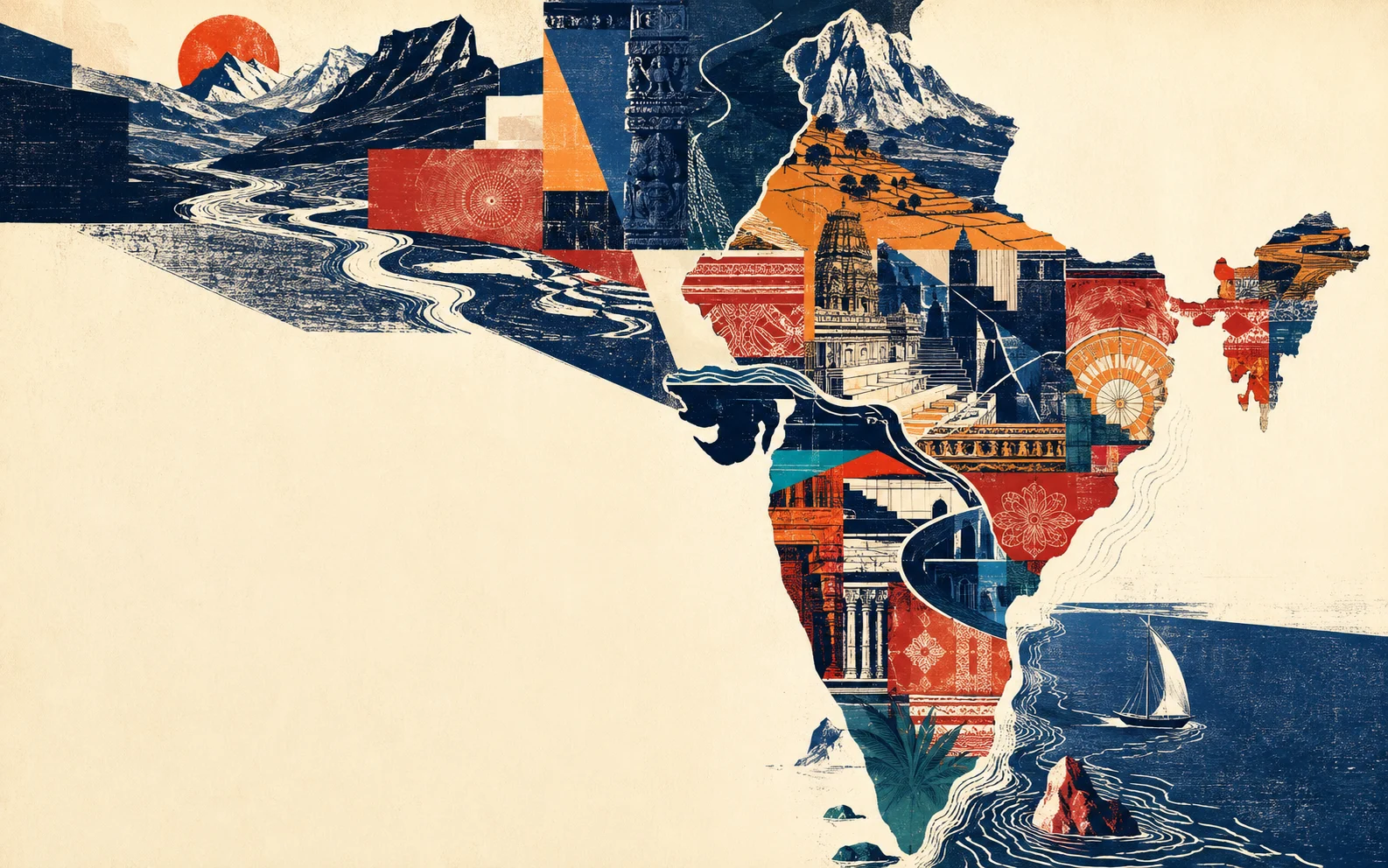
Savarkar's Bharat is not merely territory. Rivers, mountains, pilgrimage sites, stories, victories, disasters, literature, and monuments make geography into collective memory.
That frame should shape this archive: place is not a decorative filter. It is a route connecting documents to events, people, institutions, and stories.
Interpretation based on Essentials of Hindutva, pp. 33-43. Read the primary text
“The fundamental unity of man from pole to pole is true, all else only relatively so.”V. D. Savarkar, Essentials of Hindutva, p. 32
The book reaches across regions, castes, sects, and philosophical schools. Savarkar names Buddhists, Jains, Sikhs, theists, and atheists within a common cultural inheritance.
It also draws an exclusionary boundary. Muslims and Christians are denied membership in his Hindu category when their holy lands lie outside India, even where he acknowledges common ancestry and culture.
A credible archive must show both movements in the argument: the expansive call for internal unity and the boundary it creates around that unity.
Move between the text, the object, its provenance, and the arguments built around it.
Filter these routes by document type or theme. Each card opens a primary text, an official record, or the item-level source directory.
Open letters & recordsShowing all 4 evidence routes.
Read the complete source scan, then compare its claims with the page-level notes in the Argument Atlas.
Open the book PDFOpen individual published letter texts from 1912 to 1950, with dates, places, access notes, and direct page links.
Browse readable lettersRead sourced extracts on caste, inter-dining, temple entry, social equality, and scientific temper.
Open the source pageStart with official legal and parliamentary records, including the 1911 tribunal and 2018 Supreme Court judgment.
Browse official recordsTry “letters”, “reform”, “Hindutva”, or “debate”.
Help locate manuscripts, editions, photographs, recordings, official files, and serious scholarship for review.
Suggest a source